

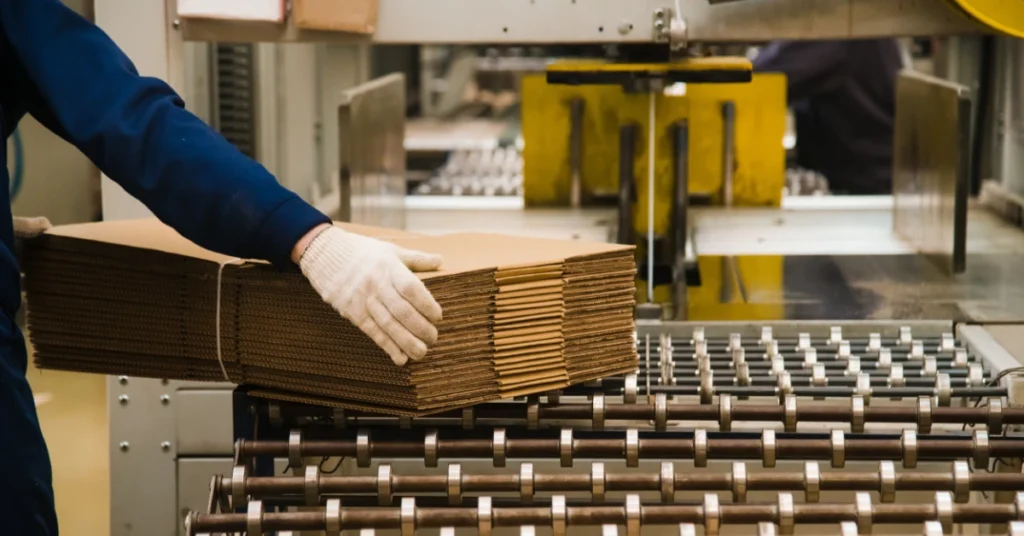
Recycled corrugated packaging plays an important role in modern supply chains. Businesses across manufacturing, retail, warehousing, and distribution rely on recycled boxes to reduce costs while supporting sustainability goals. However, consistent performance is critical. Companies cannot afford packaging failures that result in damaged products, shipping delays, or customer complaints.
That is why recycled box quality control testing protocols are essential throughout the production and distribution process. These testing procedures help manufacturers, distributors, and buyers verify that recycled boxes meet performance requirements before they are put into service. By implementing rigorous testing standards, businesses can confidently use recycled packaging while maintaining product protection and operational efficiency.
Why Quality Control Matters for Recycled Boxes
Unlike virgin corrugated materials, recycled boxes are produced using fibers that have already gone through previous manufacturing and usage cycles. While recycled materials provide environmental and economic benefits, they can also exhibit variations in strength, consistency, and durability if not properly monitored.
Quality control testing helps identify these variations before products reach customers. Testing programs establish measurable standards that determine whether boxes can withstand stacking, transportation, storage, and handling conditions.
When manufacturers implement structured testing protocols, they gain valuable data that helps maintain reliability across production runs and shipping environments.
Understanding Raw Material Inspection
Quality control begins long before a finished box is assembled. Recycled box testing starts with evaluating incoming materials used in corrugated production.
Manufacturers inspect recovered paper fibers for contamination and fiber quality. Materials containing excessive debris, adhesives, plastics, or foreign substances may negatively affect box performance.
Moisture testing is particularly important because excess moisture can weaken corrugated structures and reduce compression strength. Maintaining proper moisture levels helps ensure consistent manufacturing outcomes and predictable box performance.
Raw material inspection also helps manufacturers identify potential production issues early, reducing waste and improving efficiency throughout the manufacturing process.
Corrugated Board Testing Procedures
After recycled fibers are processed into corrugated board, manufacturers conduct several tests to verify structural integrity. These evaluations provide insight into how the finished packaging will perform under real-world conditions.
Corrugated board testing often includes measurements of thickness, flute formation, adhesive bonding, and overall consistency. Technicians evaluate whether the corrugated medium and linerboard are properly bonded and capable of maintaining structural stability.
Uniform flute formation is critical because inconsistencies can create weak points within the board. Quality inspectors monitor production closely to ensure that board construction meets established standards.
These evaluations help manufacturers maintain dependable packaging performance while minimizing production variability.
Edge Crush Testing and Box Strength
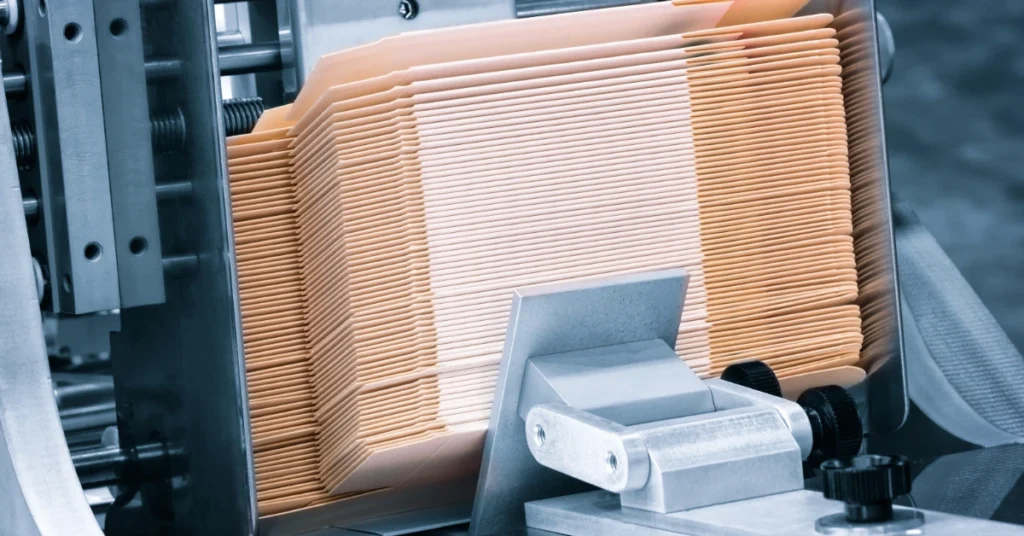
One of the most common testing methods used in corrugated packaging is the Edge Crush Test (ECT). This procedure measures the stacking strength of corrugated board by determining how much force the edge can withstand before collapsing.
ECT ratings provide valuable information about a box’s compression capabilities. Higher ratings generally indicate greater stacking strength, which is important for warehouse storage and transportation.
Businesses purchasing recycled packaging often rely on ECT values when selecting boxes for specific applications. Products that will be stacked on pallets or stored in distribution centers require packaging capable of supporting substantial loads.
Quality control teams routinely perform ECT evaluations to verify that recycled boxes meet performance specifications and customer requirements.
Box Compression Testing
Box Compression Testing (BCT) evaluates how much vertical force a completed box can withstand before failure occurs. This test simulates real-world stacking conditions commonly encountered in warehouses and during shipment.
During testing, a completed box is placed between compression plates and subjected to increasing pressure until structural failure occurs. The resulting data helps determine whether the box can safely support anticipated loads.
BCT testing is especially important for businesses using palletized shipments. Improperly rated boxes may collapse under stacking pressure, resulting in damaged products and compromised loads.
By conducting routine compression testing, manufacturers can verify that recycled packaging meets performance expectations and remains suitable for demanding logistics environments.
Burst Strength Evaluation
Burst strength testing measures a box’s ability to resist punctures and sudden impacts. This evaluation determines how much pressure the corrugated material can withstand before rupturing.
Although ECT ratings are widely used in modern packaging applications, burst strength testing remains valuable for certain industries and product types. Companies shipping heavy or irregularly shaped items may rely on burst testing data when selecting packaging materials.
Quality control personnel use these evaluations to identify weaknesses in recycled corrugated materials and ensure that boxes can withstand handling stresses encountered during transportation.
The combination of burst testing and compression testing provides a more complete understanding of overall packaging performance.

Moisture Resistance and Environmental Testing
Environmental conditions can significantly impact recycled box performance. Changes in humidity and temperature may affect corrugated strength, especially during long-term storage or transportation.
Quality control programs often include environmental testing to evaluate how boxes perform under various conditions. Samples may be exposed to controlled humidity levels, temperature fluctuations, or simulated warehouse environments.
These tests help manufacturers understand how recycled boxes will respond to real-world challenges. The resulting data allows packaging professionals to recommend suitable products for specific storage and shipping situations.
For companies relying on bulk boxes for shipping, environmental testing provides added confidence that packaging will maintain structural integrity throughout the supply chain.
Documentation and Traceability
Comprehensive recordkeeping is an important component of any quality control system. Testing results, production data, material specifications, and inspection records provide valuable documentation for manufacturers and customers alike.
Traceability allows businesses to identify specific production batches and review historical performance information when necessary. If quality concerns arise, detailed records help determine the source of the issue and facilitate corrective action.
Documentation also supports compliance with industry standards and customer requirements. Many organizations require packaging suppliers to maintain detailed testing records as part of their quality assurance programs.
Strong documentation practices contribute to greater accountability and transparency throughout the packaging supply chain.
The Future of Recycled Packaging Quality Assurance
Advancements in automation, digital monitoring, and data analytics continue to improve recycled packaging quality control. Modern inspection systems can identify defects more quickly and provide real-time feedback during production.
As sustainability initiatives continue to grow, demand for recycled packaging is expected to increase. Quality assurance programs will play an even greater role in ensuring that recycled boxes deliver the performance businesses require.
Manufacturers that invest in advanced testing procedures and continuous improvement efforts will be well positioned to meet evolving customer expectations.
Guarantee Quality
Reliable packaging performance begins with thorough testing and verification. Quality assurance procedures for recycled corrugated boxes provide manufacturers and buyers with the confidence that recycled corrugated packaging can withstand the demands of storage, handling, and transportation.
From raw material inspection and compression testing to moisture evaluation and statistical analysis, every stage of the process contributes to packaging reliability. These structured quality assurance measures help businesses minimize risk, improve operational efficiency, and protect products throughout the supply chain.
Posted by