

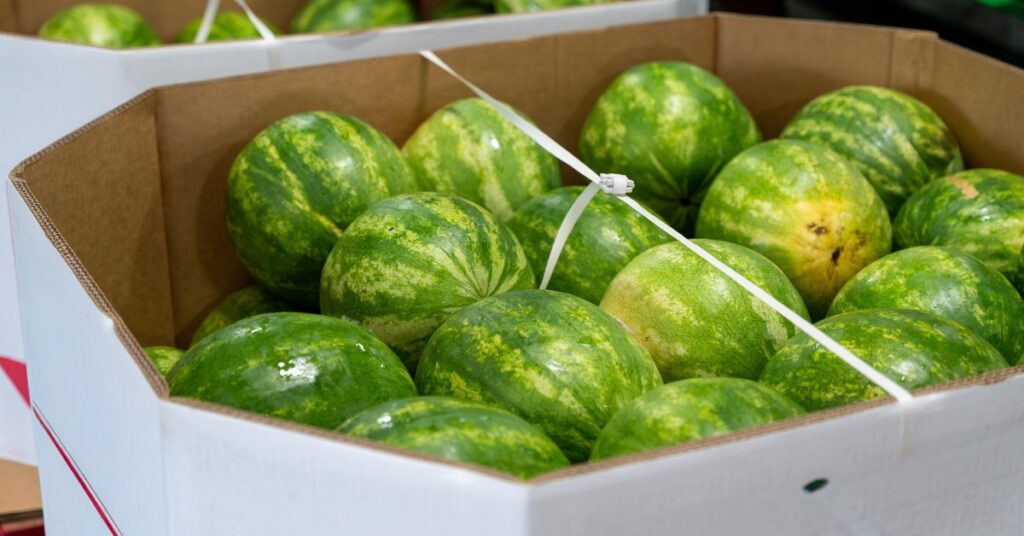
For businesses that handle large quantities of fruits and vegetables, corrugated produce bins need to do more than simply hold products. They must maintain their shape during filling, storage, handling, and transportation while supporting the weight associated with bulk loads.
Understanding produce bin load limits by wall thickness specs can help businesses evaluate packaging more effectively. Wall construction is an important part of that evaluation, although thickness by itself does not establish exactly how much weight a bin can safely carry.
Why Produce Bin Strength Matters
Produce bins may encounter demanding conditions throughout the supply chain. A bin can be filled with a substantial volume of product, moved by material-handling equipment, placed in storage, transported by truck, and potentially stacked with other containers.
Every stage can place stress on the corrugated structure. If a bin is not suited to its load and handling environment, its walls may bow, corners may lose stability, or the overall container may become less effective at protecting its contents.
Choosing an appropriate bin specification can therefore support more than product protection. Reliable packaging can contribute to smoother material handling, more efficient warehouse operations, and fewer interruptions caused by damaged or unstable containers.
How Wall Thickness Influences Bin Performance
Corrugated wall construction plays an important role in the rigidity and durability of a produce bin. Depending on its construction, a heavier-duty corrugated structure may provide greater resistance to forces created by the contents and the surrounding distribution environment.
Wall thickness should not be treated as a standalone load rating, however. Two corrugated bins that appear similar in thickness can perform differently because their materials, flute construction, board grades, dimensions, and designs are different.
That distinction matters when purchasing packaging for commercial produce operations. Instead of assuming that a thicker wall automatically supports a particular number of pounds, buyers should evaluate the complete packaging specification against the intended application.
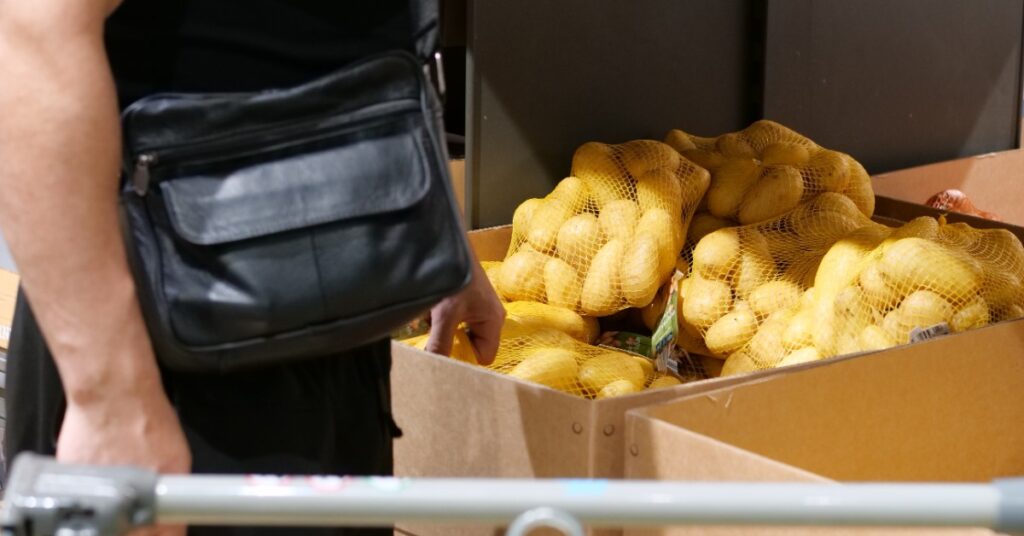
Single-, Double-, and Triple-Wall Construction
Corrugated packaging can be manufactured using different wall constructions. As additional layers are incorporated into a corrugated structure, the resulting packaging can be designed for increasingly demanding applications.
Single-wall corrugated material uses one fluted medium between linerboards. It is widely used for many packaging applications, but the appropriate construction always depends on what is being packed and how the container will be handled.
Double-wall construction incorporates two fluted mediums, while triple-wall construction adds another corrugated layer. These heavier constructions can provide additional rigidity and durability for demanding bulk packaging applications, but wall count still should not be used as the only measure of acceptable load.
Load Capacity Depends on More Than Thickness
Businesses comparing produce bins should consider the entire container rather than one specification. Board strength, flute configuration, container dimensions, structural design, manufacturing quality, and the characteristics of the produce can all influence performance.
The way a bin is used is equally important. A container carrying a dense commodity experiences a different load than one containing a lighter product, even when both bins have identical dimensions.
Handling conditions also change the demands placed on corrugated packaging. Forklift movement, pallet configuration, transportation vibration, stacking, and repeated handling can introduce forces that are not represented by the product’s weight alone.
For that reason, produce bin weight capacity based on corrugated wall specifications should be evaluated as part of a complete packaging decision rather than reduced to a simple wall-thickness calculation.
Moisture Can Affect Corrugated Performance
Produce packaging presents another consideration that many dry-goods applications do not face to the same degree: moisture. Humidity, condensation, temperature changes, and moisture associated with fresh produce can affect corrugated packaging during storage and distribution.
Corrugated fiberboard can lose some structural performance when exposed to elevated moisture. A bin that performs well under controlled, dry conditions may behave differently after spending time in a humid storage or transportation environment.
Businesses should therefore consider realistic operating conditions when determining packaging requirements. Evaluating only the initial strength of a dry, unused bin may not provide a complete picture of how that packaging will perform throughout its actual distribution cycle.
Stacking Adds Another Type of Load
The weight inside a produce bin is only one source of stress. When bins are stacked, lower containers must also withstand forces created by the containers positioned above them.
Proper alignment becomes especially important in these situations. Corrugated containers generally rely on their structural features, including their corners and walls, to manage compression forces. Poor alignment or uneven loading can change how those forces travel through a stack.
Warehouse teams should also account for how long loaded bins will remain stacked. A container subjected to a load for an extended period may face different conditions than one used for a short transportation cycle.
Match the Bin to the Produce and Distribution Process
Selecting produce packaging should begin with the actual application. Businesses need to consider what commodity will be packed, how much product the bin must contain, how it will be filled, and what equipment will be used to move it.
The distribution process is another key consideration. A bin traveling a relatively short distance under controlled conditions may have different requirements from packaging that will pass through several facilities or spend substantial time in storage.
This application-based approach helps companies avoid relying on assumptions about wall thickness. The objective is to use a container specification suited to the product, load, handling process, and environment as a whole.
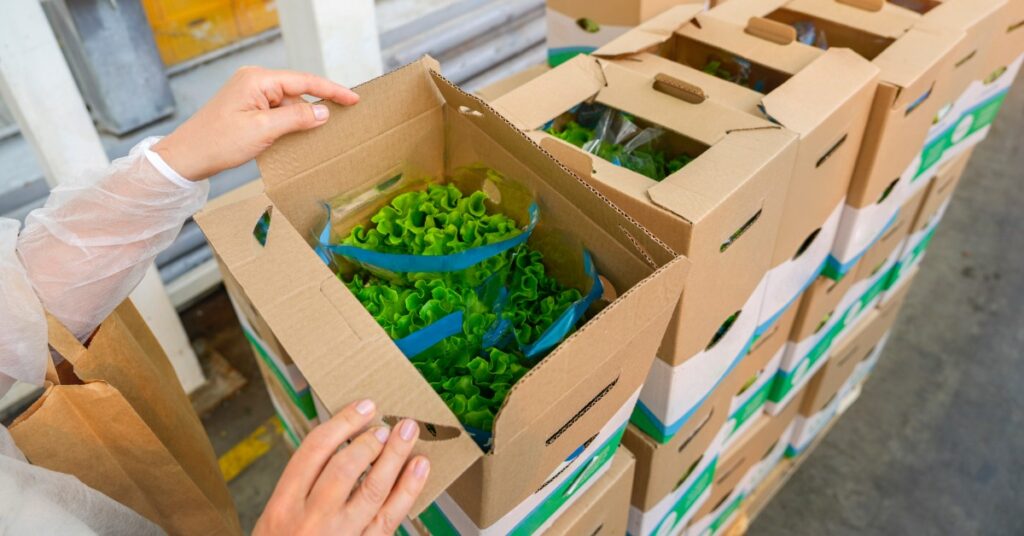
Consider the Entire Packaging Operation
Produce bins are one part of a larger packaging system. Companies that ship, store, or distribute products in volume may use several corrugated formats across different areas of their operations.
For example, a business might use bulk bins for larger quantities while relying on plain cardboard boxes for other products, components, or outbound shipments. Standardizing appropriate packaging specifications can make purchasing and inventory management easier across a busy facility.
Maintaining access to the right quantities is also important. Industrial and retail businesses can consume packaging quickly, making dependable supply an important consideration alongside container performance.
Support Efficient Bulk Produce Handling
The right produce bin can help maintain an orderly flow of goods from packing through storage and transportation. Suitable corrugated construction supports product containment while helping warehouse and distribution teams handle bulk loads efficiently.
Understanding the relationship between wall construction and load demands also helps purchasing teams make more informed comparisons. Instead of treating thickness as the only indicator of strength, businesses can consider the full range of factors that influence packaging performance.
Posted by